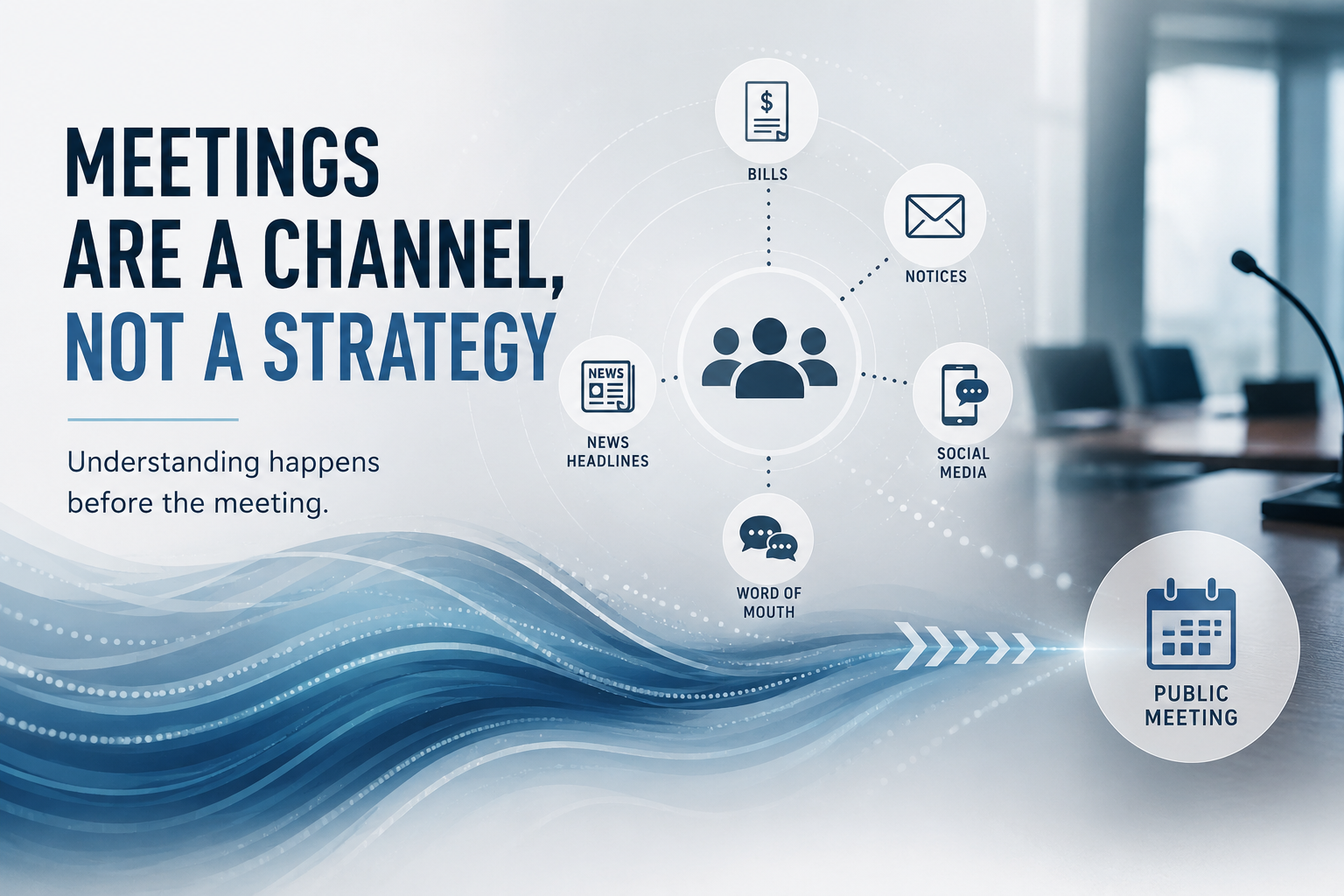
Most public complaints begin with the same sentence.
“No one told us."
That moment is not about the work you did. It is about what people experienced.
When residents hear nothing, they do not assume neutrality. They assume neglect, avoidance, or indifference. Silence does not pause the narrative. It simply hands it to someone else.
Why Silence Creates Risk
Directors often wait to speak until details are confirmed. That instinct feels responsible. It is understandable. In practice, it creates a vacuum.
When there is a vacuum, people fill it fast. Speculation spreads. Assumptions harden. Tension rises. By the time facts are ready, trust has already taken a hit. This is not a communication failure. It is a timing failure.
What the Public Assumes When They Hear Nothing
- The department is unaware
- The issue is not being taken seriously
- Information is being withheld
None of these may be true. All of them damage credibility.
What Effective Early Communication Looks Like
Early communication does not mean early answers. It means early acknowledgment. Let's say that again... it means early acknowledgment.
The process is not complicated:
- Name the issue
- State what is known
- Commit to the next update
That is enough to at least stabilize the moment.
A
Usable Example:
“We’re aware of the service issue affecting parts of the city today. Our team is working to confirm details, and we will share an update by 4 p.m.”
This message does four things at once:
- It confirms awareness.
- It acknowledges impact.
- It sets expectations.
- It reduces speculation.
Where Directors Lose Leverage
- Waiting until you feel ready
- Over-editing/thinking for precision
- Assuming silence buys time... It does not.
Others will speak in your place.
Why This Starts With You
Your staff will mirror your response speed. If leadership hesitates, hesitation becomes policy. Residents judge intent before outcomes. Delays feel personal, even when they are procedural.
In short, leadership is not about having answers first. It is about showing up first.
Closing Question
Right now, what are residents forced to assume because you have not acknowledged the issue?
A Solution
If you want an outside read before the next disruption forces the issue, book a 60-minute strategy session with us. We will review your current communications, identify where the narrative breaks under pressure, and leave you with clear, actionable steps your team can use right away.
This is a paid session. The fee is $150. If you move forward with a project within 30 days, we apply the $150 as a credit toward your first invoice. Your consultant is a Professional Certified Marketer through the American Marketing Association.
Click the button below for more information.